Medical recovery or physiotherapy?


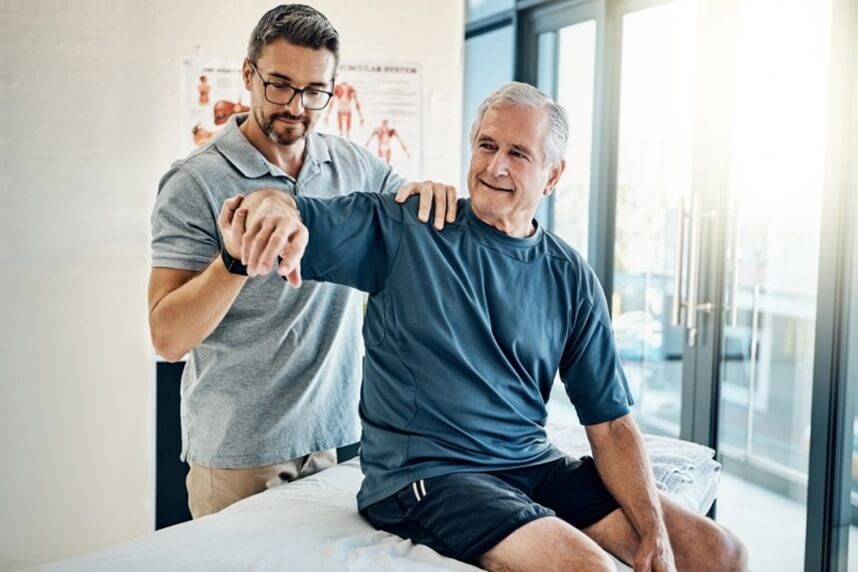
When you are dealing with pain, movement limitations, or are in the recovery period after an injury or surgery, you probably wonder which services you need — medical rehabilitation or kinesiotherapy? Although they are often mentioned together, the two are not identical. In this article, Centrokinetic specialists explain in detail the differences and how you can determine what suits you best, so you can benefit from an effective recovery.
Why does confusion arise between medical rehabilitation and kinesiotherapy?
The confusion usually results from how these terms are used in everyday language. Many patients associate any form of rehabilitation with physical exercises. However, in practice, kinesiotherapy represents only one part of a broader process. Medical rehabilitation includes evaluation, setting functional goals, selecting appropriate therapies, and monitoring progress.
Understanding the differences helps with:
- avoiding inappropriate therapies;
- reducing risks associated with functional self-treatment;
- saving time by choosing the right plan from the beginning [1][2].
What is medical rehabilitation?
Medical rehabilitation is a medical specialty focused on restoring function after musculoskeletal, neurological, or post-operative conditions. The rehabilitation physician coordinates the entire process, from the initial evaluation to adjusting the program along the way.
In most cases, medical rehabilitation is not limited to a single procedure. The doctor analyzes the cause of symptoms, the impact on movement, and associated risks. Based on this information, the specialist builds a personalized plan that may include kinesiotherapy, physiotherapy, manual therapy, or other interventions, depending on the patient’s real needs.
Medical rehabilitation is recommended in cases of:
- acute conditions such as sprains or painful contractures;
- chronic problems such as recurrent lower back pain;
- recovery after surgical procedures;
- neurological conditions that affect movement [1][2].
For a detailed presentation of available services, you can consult the dedicated medical rehabilitation page at Centrokinetic.
What does the rehabilitation physician do in practice?
The doctor does more than provide general recommendations. They:
- establish a functional diagnosis, different from an imaging diagnosis;
- identify possible contraindications for exercises or procedures;
- determine the order and intensity of therapies;
- monitor progress and adjust the plan according to the body’s response.
This coordination provides a safe and coherent framework, especially in cases with a complex medical history [1][2].
What is kinesiotherapy and how does it work?
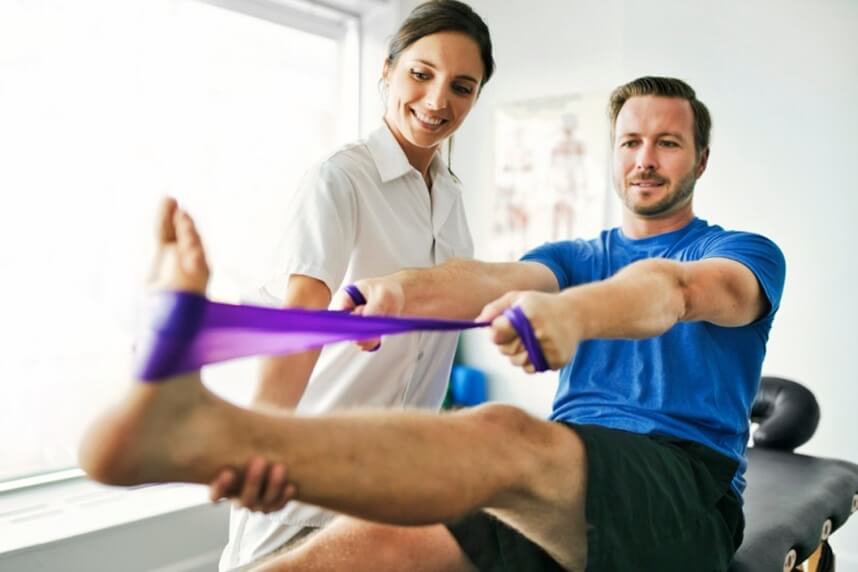
Kinesiotherapy means therapy through movement. The kinesiotherapist recommends active or assisted exercises to improve mobility, strength, stability, and movement control. In common language, kinesiotherapy is also referred to as medical gymnastics. Unlike medical rehabilitation, kinesiotherapy is a treatment component, applied either independently or as part of a plan established by a physician.
It is helpful when:
- there are movement limitations without complications;
- muscle imbalances can be corrected through exercises;
- the main goal is movement control and gradual return to daily activities [3][4].
At Centrokinetic, kinesiotherapy is carried out as part of an integrated medical plan.
Individual kinesiotherapy and group kinesiotherapy
Individual kinesiotherapy allows each exercise to be adapted to the person’s functional level. The kinesiotherapist corrects movement in real time and adjusts difficulty according to response.
Group kinesiotherapy can provide good results during maintenance or prevention phases, but it is not suitable for everyone. The choice depends on the condition, its stage, and the initially established objectives.
Medical rehabilitation and kinesiotherapy – structured comparison
The question “What should I choose?” frequently arises in the clinic. The answer depends on case complexity, not on general preference.
Medical rehabilitation includes kinesiotherapy but adds evaluation, coordination, and monitoring. Kinesiotherapy applied in isolation works strictly on the movement component.
Comparative table: medical rehabilitation vs kinesiotherapy
| Criterion | Medical rehabilitation | Kinesiotherapy |
|---|---|---|
| Coordination | Rehabilitation physician | Kinesiotherapist |
| Goal | Case-adapted functional restoration | Improvement of movement |
| Approach | Multidisciplinary | Exercise-focused |
| Common methods | Kinesiotherapy, physiotherapy, manual therapy | Active and assisted exercises |
| Program duration | Variable, medically established | Regular sessions |
| Common indications | Post-operative, persistent pain, complex cases | Various conditions and maintenance phases |
This type of comparison shows that the two options do not exclude each other but operate at different levels of complexity [1][2][3].
In which situations can kinesiotherapy be sufficient?
There are cases where properly applied kinesiotherapy meets the person’s needs. These situations usually involve mild or moderate problems without signs of complications. Common examples include:
- muscle pain after physical effort;
- mild sprains without instability;
- temporary joint stiffness;
- prevention or postural correction programs.
In these contexts, controlled movement guided by a kinesiotherapist contributes to functional recovery without requiring other interventions [3].
When is comprehensive medical rehabilitation indicated?
Medical rehabilitation is recommended when symptoms are difficult to manage through a single program, persist, worsen, or involve multiple structures. Common situations include:
- recurrent or intense lower back pain;
- spinal conditions;
- post-surgical recovery;
- osteoarthritis, ligament injuries, herniated disc;
- neurological conditions affecting gait or coordination [1].
The role of physiotherapy within medical rehabilitation
Physiotherapy uses physical agents to reduce pain, inflammation, and muscle tension. It does not replace movement but prepares and supports it. Within a medical rehabilitation program, physiotherapy:
- reduces pain intensity;
- helps relax muscles;
- supports tissue healing.
It is applied based on medical recommendation, taking indications and contraindications into account [5].
How is a medical rehabilitation plan built at Centrokinetic?
A proper program starts with evaluation. The usual steps include:
- analysis of medical history and symptoms;
- setting functional goals;
- choosing appropriate therapies;
- monitoring progress;
- adjusting the program according to response.
Each plan is adapted to the individual, age, activity level, and medical context [1].
The team involved in medical rehabilitation at Centrokinetic
Functional recovery requires collaboration. At Centrokinetic, physicians, kinesiotherapists, and physiotherapists work together. This organization supports treatment coherence and reduces risks associated with isolated decisions.
Frequently asked questions about medical rehabilitation and kinesiotherapy
Does medical rehabilitation include only exercises?
No. It includes evaluation, medical coordination, kinesiotherapy, physiotherapy, and other procedures depending on the case.
Can you do kinesiotherapy if you have pain?
Yes, after evaluation. Some types of pain require inflammation control or adjustment of exercise intensity.
How long does a rehabilitation program at Centrokinetic last?
Duration varies depending on the condition, stage, and the body’s response. There are no fixed timelines.
Is medical rehabilitation only for adults?
No. Programs are adapted for both children and adults, depending on needs.
Disclaimer: This article is for informational and educational purposes only and does not replace specialist medical consultation. The information presented does not constitute personalized diagnostic or treatment recommendations. To correctly determine the appropriate type of therapy and a plan adapted to your needs, evaluation by a specialist physician or qualified professional is necessary.
Sources:
[1] Hitzig, Sander L., et al. “Understanding the Role of the Physiatrist and How to Improve the Continuum of Care for Trauma Patients: A Qualitative Study.” Disability and Rehabilitation, vol. 43, no. 20, 4 Feb. 2020, pp. 2846–2853, www.verywellhealth.com/what-s-the-difference-between-physical-rehabilitation-and-physical-therapy-5192732, https://doi.org/10.1080/09638288.2020.1719215. Accessed Jan. 19, 2026.
[2] “Rehabilitation.” Nih.gov, National Academies Press (US), 2026, www.ncbi.nlm.nih.gov/books/NBK217492/. Accessed Jan. 19, 2026.
[3] “VA.gov | Veterans Affairs.” Va.gov, 2020, www.rehab.va.gov/KT/. Accessed Jan. 19, 2026.
[4] Matei, Daniela, et al. “The Efficiency of Kinesiotherapy versus Physical Modalities on Pain and Other Common Complaints in Fibromyalgia.” Life, vol. 14, no. 5, 8 May 2024, p. 604, pubmed.ncbi.nlm.nih.gov/38792625/, https://doi.org/10.3390/life14050604. Accessed Jan. 19, 2026.
[5] “Physical Therapy (Physiotherapy)” Cleveland Clinic, 11 Mar. 2024, my.clevelandclinic.org/health/treatments/physical-therapy. Accessed Jan. 19, 2026.
BUCHAREST TEAM










































CLUJ NAPOCA TEAM


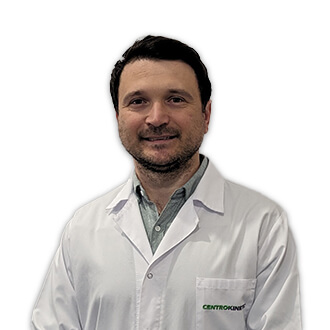

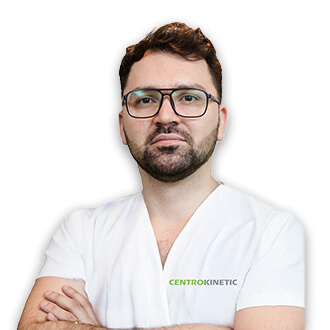






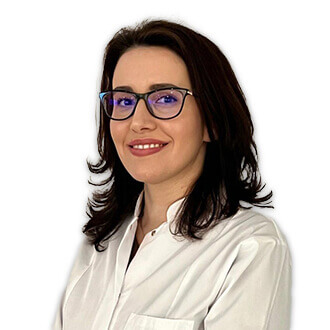





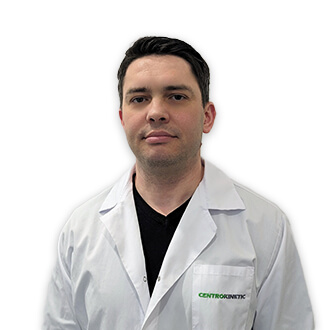












BRASOV TEAM











MAKE AN APPOINTMENT
FOR AN EXAMINATION
See here how you can make an appointment and the location of our clinics.
MAKE AN APPOINTMENT
Asiguratori privati




Parteneriate


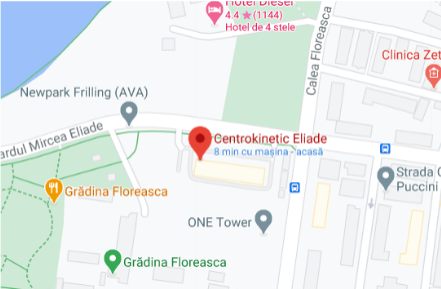
CENTROKINETIC FLOREASCA
Bucharest, 1st District,
Mircea Eliade Street, no. 18,
Eliade Tower, Entrance A, Floor 3
| Navigation | Explore 3D |
CENTROKINETIC Barbu Vacarescu
Bucharest, 2nd District,
Barbu Vacarescu Street, no. 102,
102 The Address, ground floor.
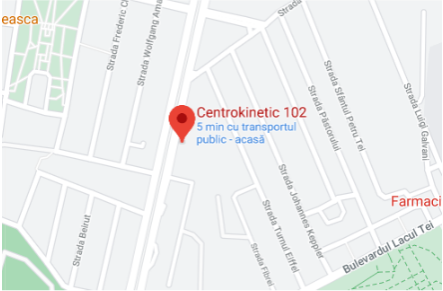
| Navigation | Explore 3D |
CENTROKINETIC MILITARI
Bucuresti, Sector 6,
Bld. Iuliu Maniu, nr. 15G,
Cladirea PBT, etaj 3.
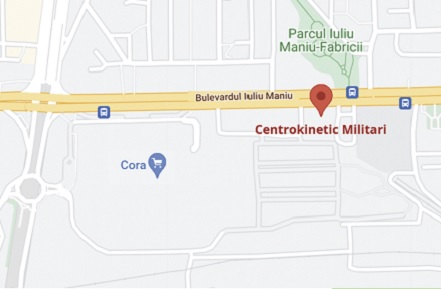
| Navigation |
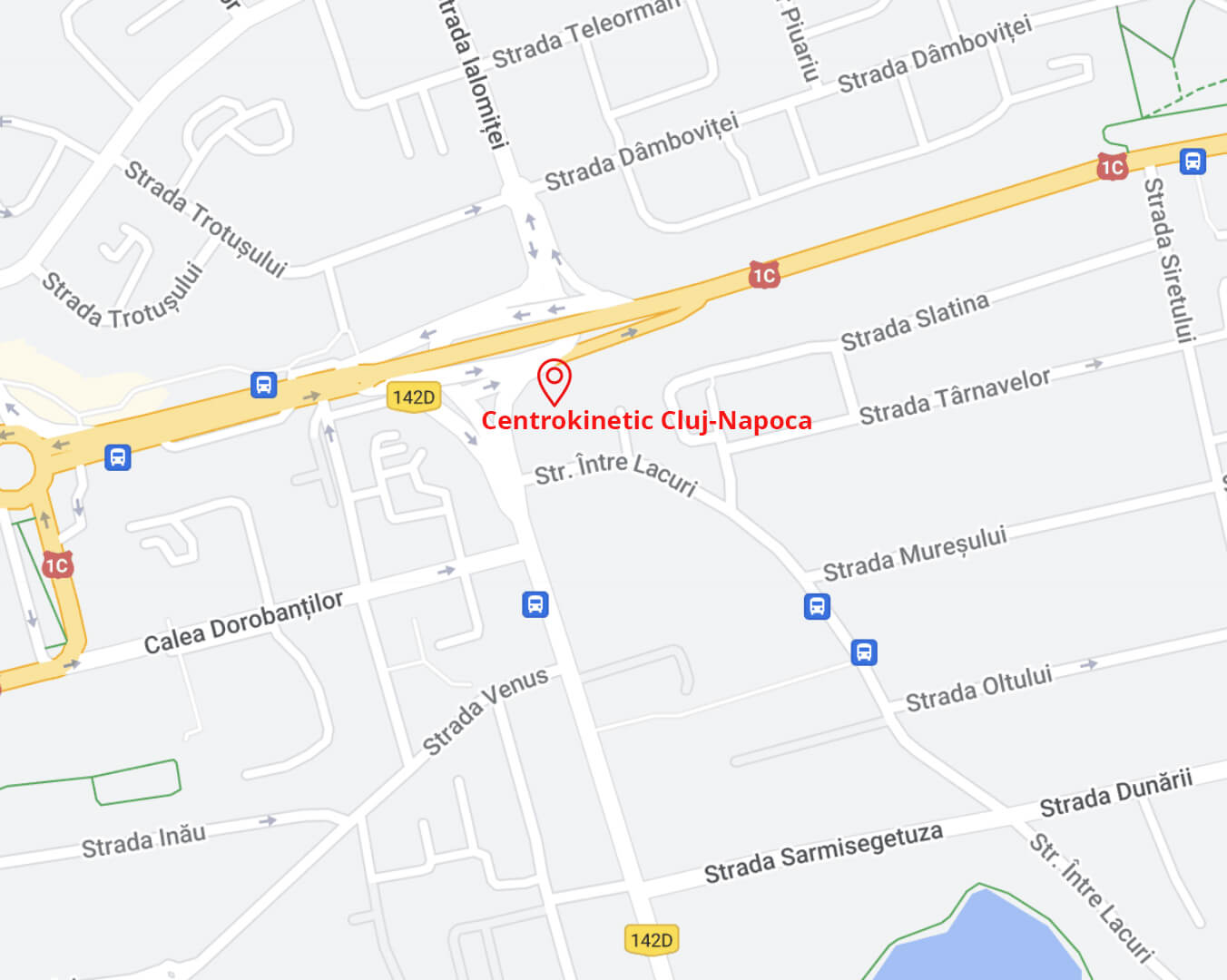
CENTROKINETIC CLUJ-NAPOCA
Cluj-Napoca,
Str. Intre Lacuri, nr.1
Intrarea este in spatele cladirii.
| Navigation |
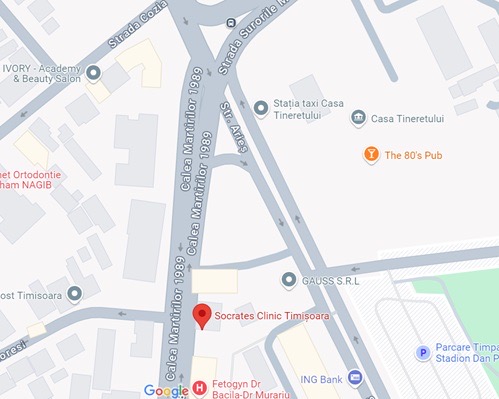
SOCRATES CLINIC TIMISOARA
Timisoara, Calea Martirilor 1989,
nr. 1.
Telefon: 0371 785 374.
| Navigation |
CONTACT
Phone: 0319693
E-mail: programari@centrokinetic.ro
Operating hours:
Monday – Friday: 07:00 – 21:00
Saturday: 09:00 – 14:00
Sunday: closed.
MAKE AN APPOINTMENT